Quality
How Zen and the Art of Motorcycle Maintenance made me ask whether I was chasing Truth or just trying to be right.
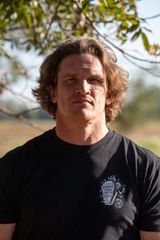
In 2013 I packed all of my belongings into my 1998 Honda CR-V and headed east on I-70, leaving the small university town of Manhattan, KS, for another small university town, Bloomington, IN. This was after leaving the small university town of Alliance, OH. Which came after leaving the small college town of Decorah, IA. Every step of the way I was hoping to reinvent myself because, somewhat unceremoniously, I had burnt down most of what I touched in those small university towns. Misery loves company. Company, as it turns out, doesn't write back once you've left town. I was young, overly passionate, and in pursuit of capital-T Truth in life. That passion came paired with a staunch contrarianism. I saw arguments as endurance events, and I wanted the largest capacity.
About a month after I arrived in Bloomington, my advisor assigned me two tasks. First, I had to watch the 1970 film Little Big Man. I had gone into my PhD thinking I would be buried in the lab, but instead I was told to watch an old Western. I was equally frustrated and intrigued. I had chosen my advisor because of his eccentricities and his reputation for being a thinker on the highest level. But I also had a burning desire to be great, and at that time in my life, being great meant being productive in the academic sense. So how could watching a movie get me any closer to greatness? Maybe it was time to start burning down this small town.
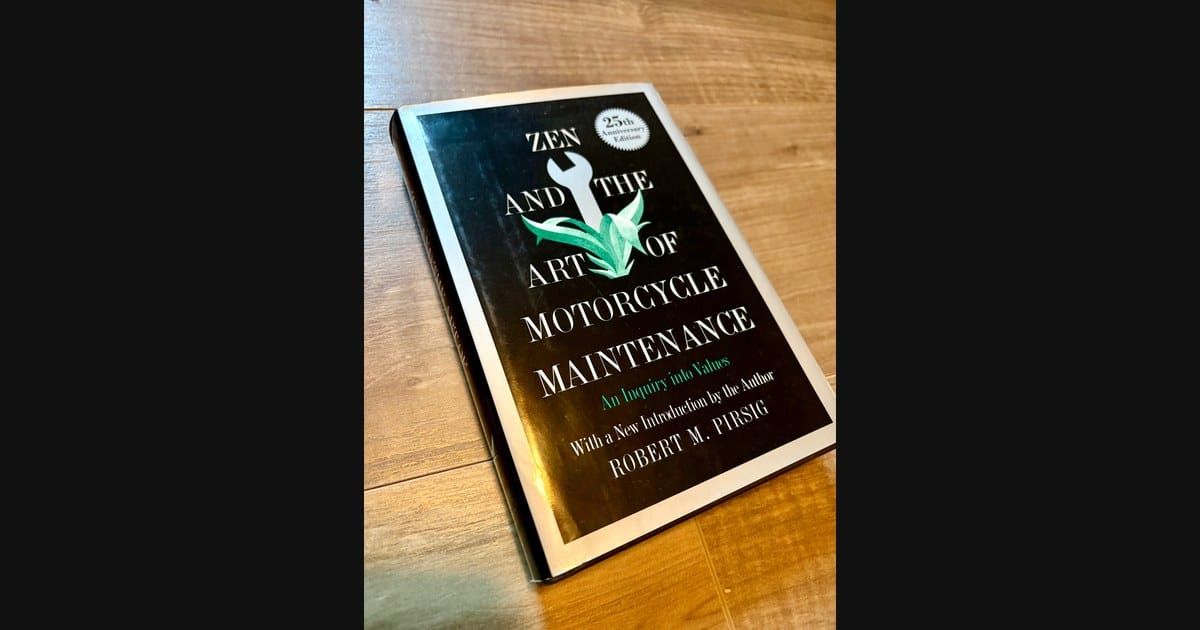
I'd never heard of the film but found it for free on YouTube. After watching it, I went back to my advisor with my notes ready for our meeting. When I sat in his office prepared to talk about the absurdities of the movie, he handed me more reading on top of the Brooks, Rowell, and Åstrand textbooks I was already working through. He assigned me a book by Robert Pirsig, Zen and the Art of Motorcycle Maintenance, that would be the single most influential thing that has happened in my life. Without reading this book, I don't think I would appreciate events like marriage or fatherhood to the same degree. I don't know if it makes the list of "Must Reads" for everyone, because I am sure there are plenty of people who will look at Phaedrus, the narrator's former self, and think "This dummy just keeps getting in his own way." But if you are one of those dummies (like I was...am?), then I think this book could illuminate your purpose in life. As for Little Big Man, I still have no idea what he hoped I'd glean from it.
I'm a romantic, though you can decide how reliable a narrator I am on that point. As a younger man, I would've been called a hopeless romantic, and I mean that beyond the believes-in-true-love sense. I held on to the idea that some ideals outrank others, that in the hierarchy of life they precede all other characteristics or traits. That being said, a younger me also watched The Graduate and thought it was a love story.
But, as a romantic, I held my ideals close and struggled with...dare I say fought...those who didn't share a similar passion. It was never about finding people who shared similar opinions, but about finding people who held their opinions with such strength that they would engage in verbal pugilism to defend them. I believed in the superiority of certain ideals, but, more importantly, I placed value on one's willingness to defend those ideals using argument as a force of conviction. I believed in defending those ideals even when I knew it would cause conflict, because one can disagree and still garner respect so long as the disagreement is one of conviction rather than convenience. Anyone willing to defend their ideals took life as seriously as I did. Anyone unwilling was unprincipled. But no one wanted to be thought of as unprincipled while watching K-State football or playing Rock Band in their dorm. I had conviction in spades, but the same couldn't be said for my tact. As life went on, it got lonely.
When I finished Zen, it shed a completely new light on the frustrations I had run into while holding this romantic approach to life. In my pursuits, I was trying to bring about the same romanticism in others, and I was dismayed when they wouldn't match me. Quality, as Pirsig argues, is an experience that can't be named as easily as it can be recognized. It's a higher order than simple truth or logical constructs. Neither romantic nor classical thinking, as Pirsig uses the terms, can be complete without Quality, which makes the pursuit meaningful in the first place. Nothing in the book suggested letting go of my ideals. In fact, the book only strengthened that trait within me. But, instead of outwardly seeking confrontation to defend ideals, I started an argument with myself that I've carried with myself to this day: whether my pursuit of Truth was actually a pursuit of being right, and whether the two had become indistinguishable in my mind.
If I had been pursuing Truth, why had being right become so important to me? Pirsig's exploration of Quality forced me to reconsider what I was actually trying to achieve. Perhaps the point was never to arrive at a definitive endpoint where I could declare myself right, but to understand what made the pursuit worthwhile in the first place.
I haven't abandoned intellectual argument or my desire to develop my capacity for it. But the measure of success is no longer how many people I can convince or how much opposition I can withstand. It's whether I leave an argument with a better understanding of the assumptions I brought into it, including those I hadn't realized I held. I haven't shed my romantic ideals, and likely never will. I am learning to hold them without treating my own conviction as proof of their worth.
This is free to read. If you'd like to help cover the costs of the site and the apps, there's a tip jar.
